AC Installation Colorado Springs: What a New System Really Involves
A new cooling system is a one day job with years of consequences, and the choices made before install day decide most of them. This guide to AC installation Colorado Springs covers real local costs, how sizing works at 6,000 feet, what adding air to an older home involves, and the paperwork a finished job should leave behind.
- Written itemized quotes
- Manual J sizing included
- Permits pulled and inspected
- Local Colorado Springs team
What install day looks like
Most single system installs are done in a day. The crew arrives in the morning, protects floors and work areas, removes the old equipment, and sets the new condenser and indoor coil. By late afternoon the system is charged, tested, and cooling, and the day ends with a walkthrough of the thermostat and the paperwork.
Jobs that add ductwork, upgrade an electrical panel, or convert from a swamp cooler take longer, usually two to three days. That timeline belongs in your written quote before work starts, so you can plan around it. Our hours are Mon to Sat 7am to 10pm and Sun 8am to 10pm.
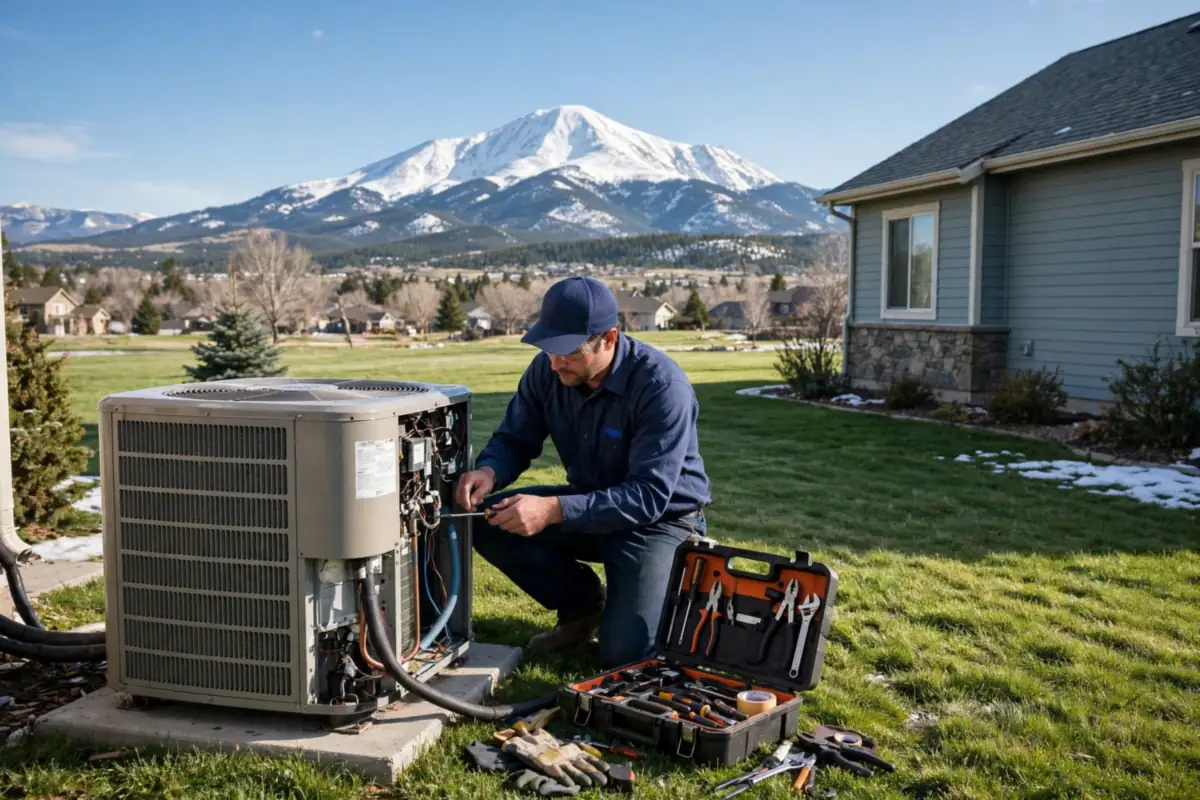
AC Installation Colorado Springs: What a New System Costs
A full replacement in Colorado Springs typically runs $5,500 to $12,000 installed, depending on tonnage, efficiency, and duct condition. One local company advertises AC replacement from $5,500 installed. Treat these figures as a guide range only. Your price is confirmed in a written itemized quote before work starts.
Price is the first question on most install calls, and it should be easy to answer before a truck rolls. Three things move the number most. Tonnage sets the size of the equipment your home needs. Efficiency, shown in SEER2 ratings, sets what the equipment costs to buy and to run. Duct condition decides how much extra work the install needs before the new system can move air properly. A home with sound ducts and a straight swap sits at the low end. A larger high efficiency system with duct repairs sits at the high end.
The figures on this page are sourced, not invented. A local company advertises AC replacement from $5,500 installed, and that from price is the floor of the range we use. Our guide range for a full replacement is $5,500 to $12,000, and it is labelled a guide range because your home sets the final number. What you should hold every company to is the paperwork: a written itemized quote that lists equipment, labor, lineset, electrical work, permit, and disposal as separate lines before you sign.
| Job | Typical cost | What it covers |
|---|---|---|
| Full AC replacement, standard equipment | $5,500 to $12,000 | Guide range for a complete swap using existing ductwork in sound condition. |
| Advertised local starting price | From $5,500 installed | The from price one local company publishes for AC replacement. The final price depends on the home. |
| Adding central AC where none exists | Priced after inspection | Ductwork, panel capacity, and condenser placement set the scope, so this job is quoted in writing after a home visit. |
Guide figures for Colorado Springs homes in 2026. These are ranges to plan with, not quotes. Your final price is always confirmed in a written itemized quote before work starts.
If the choice is still repair or replace, the AC repair cost guide shows what common repairs run, so you can compare one more repair against a new system. If the furnace is the same age as the AC, price the pair together: the furnace replacement cost guide sets out the heating side, and combined work usually costs less than two separate installs booked months apart.
How big should the new air conditioner be?
Manual J is the sizing standard to ask any installer for by name. It works from your home size, insulation, windows, and sun exposure. At about 6,000 feet a unit delivers roughly 10 to 15 percent less than nameplate capacity, so sea level sizing falls short here.
Manual J is the load calculation method the trade uses to size heating and cooling equipment. It counts square footage, ceiling height, insulation, window size and direction, air leakage, and how many people live in the home. The output is a load for your house, not a guess based on the old unit or a rule of thumb per square foot. Ask any installer for the Manual J result by name, and ask to see it. A company that sized your system properly can show you the number it sized to.
Altitude changes the answer. Air at 6,000 feet is thinner, so the outdoor unit moves less air across its coil and rejects less heat per hour. In practice an air conditioner here delivers roughly 10 to 15 percent less than its nameplate capacity. A system sized on sea level assumptions can run all afternoon and still fall behind on a 95 degree day, which is exactly when you need it most. Correct local sizing accounts for that loss up front instead of discovering it in July. Our altitude guide works through how altitude changes HVAC sizing alongside what the same thin air does to furnaces and heat pumps.
Bigger is not safer. An oversized unit cools the air near the thermostat fast, shuts off, and starts again minutes later. Those short cycles wear the compressor and the fan, use more power at startup, and leave rooms uneven. They also hurt humidity control. Even in our dry climate, monsoon weeks plus cooking and showers add indoor moisture, and a system that runs in short bursts removes less of it, so the house can feel clammy at a temperature that should feel fine. A right sized system runs longer, steadier cycles, holds an even temperature, and usually lasts longer doing it.
When a new system beats one more repair
Most AC replacement Colorado Springs homeowners book starts the same way: an older system fails on a hot day, and the repair quote is large enough to raise the question. Replacement deserves a hard look when the system is 12 to 15 years old or more, when the compressor has failed, when refrigerant leaks keep coming back, or when repairs have become a yearly habit. The $5,000 rule gives a quick test: multiply the age of the system by the repair quote, and if the result passes $5,000, put the money toward a new system instead. If the test points the other way, repair it instead: AC repair is the other half of what we do, quoted in writing the same way.
- Age: the system is 12 to 15 years old or more, and a major part has failed.
- Compressor failure: the heart of the system has gone on a unit that is already old.
- Repeated refrigerant leaks: especially on older R-22 systems, where refrigerant itself is costly.
- Uneven cooling: rooms that never cooled well, even when the old system was healthy.
- Climbing repair bills: a different fault each summer, with quotes rising year after year.
A planned AC replacement Colorado Springs install also lets you fix what the old system got wrong. A load calculation may show the old unit was oversized or undersized for the house. Duct leaks found during the install quote can be sealed while the system is apart. And if the furnace is ageing alongside the AC, the furnace installation page explains how the heating side is sized and fitted, so you can judge a combined quote with both halves in view. The replacement cooling unit can also be a heat pump rather than a cooling-only unit, which adds efficient heating for the mild months while the furnace keeps the deep cold. Our guide to heat pump vs gas furnace works through when that swap pays in Colorado Springs. The homes making this call cluster by age: Stetson Hills tract systems are hitting the 12 to 15 year window now, and larger homes in the Broadmoor area often replace one of several systems at a time, planned in stages rather than all at once.
Adding central air to an older Colorado Springs home
Many older homes on the westside and in Old Colorado City were built without central air, and some still cool with a swamp cooler. Adding central AC is usually possible, but the ducts, the electrical panel, and the condenser spot decide how big the job gets.
Large parts of the westside and Old Colorado City were built when summer cooling meant open windows, thick walls, and shade. Many of those homes later added a swamp cooler, also called an evaporative cooler, which works well in dry air but struggles on humid monsoon days and needs regular pad and pump care. Owners add central air for steadier cooling, better control room by room, and one less system to maintain on the roof.
Adding central air to a home that never had it is a bigger job than a swap, and three checks decide the scope before anyone quotes a price.
- Ductwork condition: some older homes have no ducts at all, and some have ducts sized for heat only. Cooling needs more airflow, so ducts are inspected, sealed, and sometimes extended or replaced before a coil is added.
- Electrical panel capacity: a condenser needs a dedicated circuit and a disconnect by the unit. Older 100 amp panels may need an upgrade or a subpanel before the install can pass inspection.
- Condenser placement: the outdoor unit needs a level pad, clear airflow on all sides, and a short, protected lineset run into the house. Tight side yards, alley lots, and sloped lots each limit where it can sit.
Converting from a swamp cooler adds a few steps. The old cooler comes down, the roof opening is closed and flashed, the water line is shut off and capped, and the duct path is checked, because swamp systems often used large single ducts that do not match what central air needs. Many owners keep the swamp cooler as backup for dry weeks and run central air when humidity rises. Either way, the conversion steps belong in the written quote, not in a surprise on install day.
From first visit to first cool evening in three steps
Every install follows the same shape, whether it is a straight swap or a first system for an older home. Knowing the shape helps you judge any quote you are given, and it helps you see what a too cheap quote leaves out.
Load calculation and written quote
We measure the home, run a Manual J load calculation, and check ducts, panel capacity, and condenser placement. You get a written itemized quote that names the equipment, the tonnage, the efficiency rating, and every line of work, including the permit.
Install day
The crew protects floors, removes the old equipment, sets the new condenser and coil, runs and seals the lineset and duct connections, and completes the electrical work. Most single system installs finish the same day, and the work area is left tidy.
Commissioning and walkthrough
The system is evacuated, charged to the manufacturer specification, and tested. Commissioning readings are recorded and left with you. Then we set up the thermostat together, hand over the permit card and warranty paperwork, and show you the filter and the shutoff.
We pull the permit, and the city checks the work
We pull the permit on every install, the city inspects the finished work, and you get the paperwork for your records. That paper trail matters. An unpermitted install often surfaces at resale or at a later inspection, when fixing the record costs far more than the permit did.
A permit is not paperwork for its own sake. It puts a city inspector between you and any shortcut: the electrical connection, the disconnect, the condensate drain, and the lineset work all get checked against code after we finish. The permit fee is a small line inside the quote, and it should be listed as its own line, not buried in a single round total.
The resale problem is the one owners feel later. When a home is sold, an inspector or a buyer who checks permit records can flag an install that was never permitted. That can mean paying to open walls, fixing work that was never checked, or crediting a buyer to close the sale. A permitted install with the inspection signed off turns that conversation into a simple one: you hand over the card and the file is closed. Read more about how we work if you want our approach set out in one place.
What a finished install should look like
A finished install should look tidy and read clearly on paper. Lines sit straight and supported, duct joints are sealed, commissioning readings are recorded and left with you, the thermostat is set up and explained, and the permit card and warranty paperwork are in your hand before we leave.
- Lineset: runs straight and supported, insulated along its length, with every wall penetration sealed against air and pests.
- Duct connections: neat and sealed, with no gaps, crushed flex, or loose joints at the coil and the plenum.
- Commissioning readings: recorded and left with the homeowner, including refrigerant pressures, temperature split, and airflow checks.
- Thermostat: set up and walked through with you, including the schedule, fan settings, and filter reminders.
- Paperwork: the permit card and warranty paperwork handed over before the crew leaves, with model and serial numbers recorded.
Walk the finished job with this list in hand before you make the final payment. A good install looks plain in the best way: straight lines, sealed joints, quiet running, and a folder of paperwork that matches what is in your home. If anything on the list is missing, ask for it on the spot, while the crew and the inspector can still put it right.
The first year with a new system
A new system still needs basic care. Change or wash the filter on the schedule in your paperwork, keep the condenser clear of cottonwood fluff, grass, and snow, and keep vents open in rooms you use. Shrubs and fences should stay clear of the outdoor unit so air can move freely across the coil.
An annual check keeps small problems small: refrigerant charge, electrical connections, the condensate drain, and coil condition all get looked at before the hot season. Our AC maintenance page sets out what a tune up visit covers. Keep your commissioning readings with the house paperwork, because they are the baseline every later visit compares against, and they travel with the home if you sell.
AC Installation Questions
These are the questions homeowners ask us most before booking an install, answered plainly. If your home or your timing is unusual, call +1 (719) 555-0100 and describe the house: age, size, and whether it has ducts at all shape the answer more than any general guide can.
How much does AC installation cost in Colorado Springs?
A full replacement typically runs $5,500 to $12,000 installed in Colorado Springs, depending on tonnage, efficiency, and duct condition. One local company advertises AC replacement from $5,500 installed, so treat $5,500 as a starting point, not a quote. Your final price should arrive as a written itemized quote after a load calculation at your home.
How long does an AC installation take?
Most single system installs finish in one day. The crew removes the old unit, sets the new condenser and coil, connects and seals the lineset and ducts, charges the system, and runs commissioning checks before the walkthrough. Homes that need new ductwork, panel work, or a swamp cooler conversion can take two to three days, and that timeline should be in your quote.
Do I need a permit to install an air conditioner?
Yes. A new air conditioner install needs a permit in Colorado Springs, and the finished work is inspected by the city. We pull the permit as part of the job and hand you the paperwork. Skipping the permit can surface at resale or at a later inspection, when putting the record right costs more and slows a sale.
What size air conditioner does my home need?
Size comes from a Manual J load calculation, not from square footage alone or from the size of the old unit. The calculation uses your home size, insulation, windows, layout, and sun exposure, then adjusts for altitude. At about 6,000 feet a unit delivers roughly 10 to 15 percent less than nameplate capacity, so ask any installer to show you the Manual J result in writing.
Should I replace the AC and furnace together?
Often it makes sense when both units are old. The furnace and air conditioner share a blower and ductwork, so one crew visit, one sizing calculation, and one permit process can cost less than two separate jobs, and the parts are matched to work together. If your furnace is young and healthy, replace the AC alone and keep the furnace. Price both ways in writing before you decide.
When is the best time of year to install a new AC?
Spring and early fall are the easiest times. Crews are less booked, you can compare quotes without a hot house forcing the decision, and the new system is ready before the first 95 degree stretch. A planned install also leaves time for a proper load calculation, duct fixes, and panel work instead of a rushed swap during a heat wave.
Ready to price a new air conditioner for your home?
Call for a load calculation and a written itemized quote, with the permit, the equipment, and every line of work shown before you decide. Hours are Mon to Sat 7am to 10pm and Sun 8am to 10pm.