Heat Pump vs Gas Furnace: The Honest Answer for Colorado Springs
Heat pump vs gas furnace is the biggest heating decision a Colorado Springs homeowner makes, and most of the advice online is written for milder cities or for Denver utility prices. This guide works through the comparison with our numbers instead: a design temperature of 7 degrees, thin air at 6,035 feet, and bills from Colorado Springs Utilities.
- Written itemized quotes
- Prices published online
- Altitude-checked repairs
- Local Colorado Springs team
Three homes, three answers
Gas line at the house: dual fuel is usually the strongest setup, a heat pump for mild weather and cooling, the furnace for deep cold.
All-electric or propane: a cold-climate heat pump, with the backup heat planned honestly for the coldest nights.
Simple and proven: a high-efficiency gas furnace with a separate air conditioner, derated and set up for this altitude.
The rest of this page shows the working behind each answer.
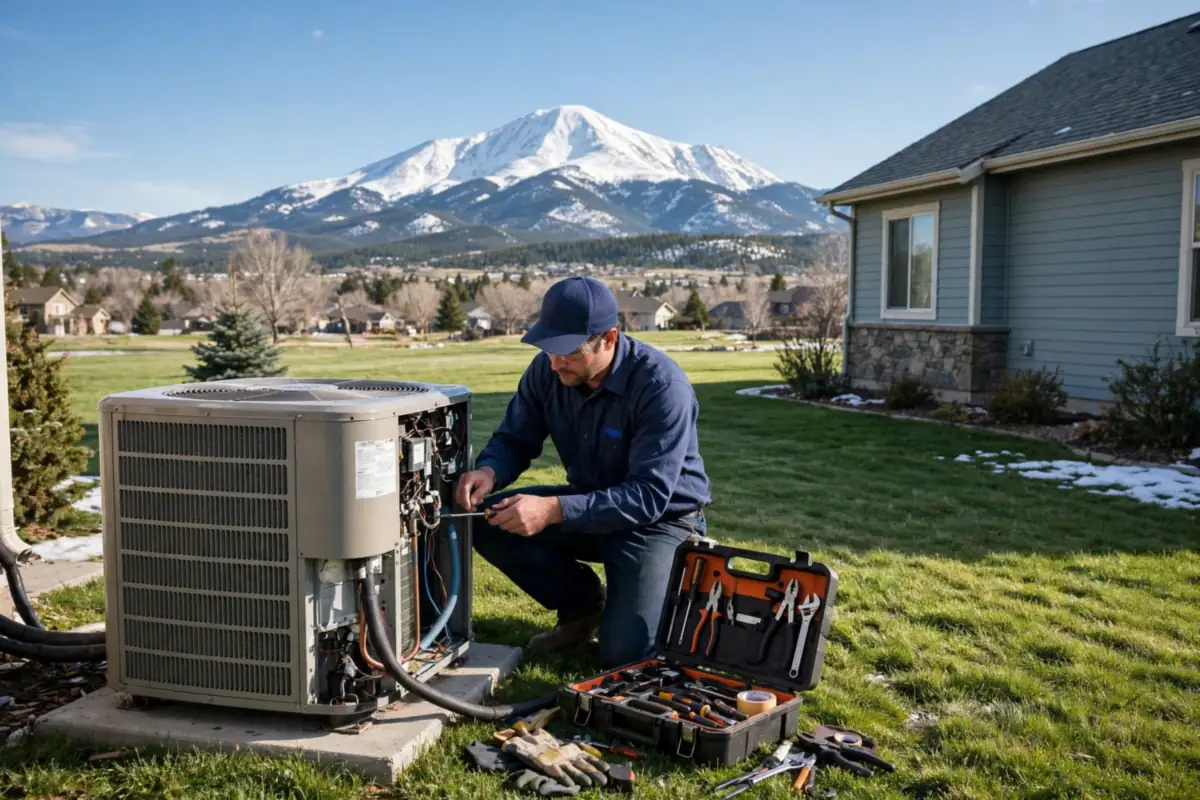
The short answer for Colorado Springs homes
For most Colorado Springs homes with a gas line, dual fuel is the honest answer: a heat pump for mild weather and cooling, a gas furnace for deep cold. All-electric and propane homes lean to a cold-climate heat pump. A gas furnace alone still wins on simplicity.
Notice what that answer does not say. It does not say heat pumps cannot work here. Modern cold-climate heat pumps heat thousands of Colorado homes, and the physics that limits them is a matter of degree, not a deal breaker. It also does not say a furnace is the old-fashioned safe choice that needs no thought. A furnace installed here without its altitude adjustment is a furnace burning dirty and wearing out early, whatever the brochure promised.
The real question is narrower than the national debate: given your house, your fuel supply, and a winter that runs from mild afternoons to single-digit nights, which system carries which part of the season? Answer that, and the brand arguments and the forum wars mostly fall away. The sections below take the pieces in order: how each system makes heat, what a local winter asks of it, what altitude does to both, what each costs to run on a local bill, and when the moment to decide actually arrives.
How each system actually makes heat
A gas furnace makes heat. It burns gas in a sealed chamber, runs house air past the hot metal of a heat exchanger, and sends that air to the registers at roughly 120 to 140 degrees. The heat output barely changes with the weather outside: a furnace that heats the house at 40 degrees heats it the same way at zero, because the fire does not care about the temperature outdoors. Its efficiency is stated as AFUE, and a modern high-efficiency furnace turns roughly 95 cents of every fuel dollar into heat in the house.
A heat pump moves heat instead. The outdoor unit gathers heat from the air outside, even cold air, and carries it indoors, running the same refrigeration cycle as an air conditioner but in reverse. Because it moves heat rather than making it, it can deliver two to three units of heat for each unit of electricity it uses in mild weather. That ratio is its efficiency, and it is the reason heat pumps are cheap to run for much of the year. It is also the reason their heat feels different: supply air at the registers is roughly 90 to 105 degrees, warm but close to skin temperature, so a heating cycle can feel like a cool draft even while the room is gaining heat.
Two honest consequences follow. First, the forum complaint about heat pump heat feeling weak or clammy is real physics, not a defect: the air is gentler, the runs are longer, and a house heats steadily instead of in hot blasts. Steady variable-speed systems soften this a lot, because they run nearly all the time at low output. Second, the heat pump advantage shrinks exactly when you need heat most, because cold air holds less heat to move. That tradeoff is the whole story of the next two sections.
What a Colorado Springs winter asks of both systems
Colorado Springs is a heating city: the design temperature is about 7 degrees, and heating degree days outnumber cooling degree days roughly ten to one. A heat pump carries the house alone until its balance point, often 25 to 30 degrees. Below that, backup heat decides the winter.
Start with the season itself. Our heating season runs from late September to late April, January averages a low of about 18 degrees, and the coldest nights are designed for at about 7 degrees. Cooling, by contrast, is a short and mild season. Any system you buy here is a heating system first, whatever else it does in July. That single fact should steer the decision more than any headline about cooling efficiency.
Against that winter, a heat pump has a balance point: the outdoor temperature where the heat it can move exactly matches the heat the house is losing. Above it, the heat pump carries the house alone. Below it, the gap grows as the night gets colder, and backup heat has to fill it. That point is often around 25 to 30 degrees, and it depends on the size of the system, the insulation of the house, and how the system was set up. On the coldest nights here, around the 7 degree design temperature, most air source heat pumps cannot carry a house alone. A well-planned system expects that and has the backup ready. A badly planned one discovers it at two in the morning.
Cold-climate heat pumps narrow the gap honestly. The current generation is built and rated to hold most of its heating capacity down into the single digits and to keep running below zero, where older models gave up around 30 degrees. If your research is a few years old, that improvement is real. What it does not change is the shape of the curve: output and efficiency still fall as the air gets colder, and at our design temperature the backup source still does serious work. Plan for both halves of that sentence.
Altitude changes both answers
Sea level advice skips the fact that defines this city: at about 6,035 feet the air holds roughly a fifth less mass than at sea level, and both systems feel it, in opposite ways.
A gas furnace burns fuel mixed with that thin air. The National Fuel Gas Code requires gas appliance input to be derated by 4 percent for every 1,000 feet above 2,000 feet, which works out to a 16 to 24 percent input reduction here, done with a high-altitude orifice and pressure-switch kit. A furnace fitted without that adjustment burns rich: incomplete combustion, soot, nuisance shutdowns, and a shorter life. It still makes heat, which is why so many unadjusted furnaces limp along unnoticed. The kit, and a combustion test after fitting, are standard parts of a proper furnace installation in this city, and they are worth asking any installer about by name.
A heat pump loses capacity instead. Thin air carries less heat across the outdoor coil, so the same unit delivers roughly 10 to 15 percent less than its nameplate rating compared with sea level. That moves its balance point up: a system the charts say should carry a house to 25 degrees may hand over to backup closer to 30 here. Neither penalty is a reason to reject either system. Both are reasons the sizing has to be done with a load calculation that uses the elevation, not a chart copied from a sea level manual and not a guess based on the unit being replaced.
Heat pump vs gas furnace: running costs on a Colorado Springs Utilities bill
On a Colorado Springs Utilities bill, the cheaper heat changes with the weather. A heat pump wins in mild weather because it moves about three units of heat for each unit of electricity. In deep cold its output and efficiency fall, and gas usually wins per unit of heat.
Most comparison content online is written for Xcel Energy customers up the road in Denver. Colorado Springs is served by Colorado Springs Utilities, our own city-owned utility, which supplies both the gas and the electricity to most homes here. The rates are different, so the conclusions borrowed from Denver content, and from national articles that assume expensive gas, do not land cleanly on a CSU bill. Run the comparison with local eyes instead.
The honest way to compare is cost per unit of heat delivered, season by season. In mild weather a heat pump moves roughly three units of heat for each unit of electricity it buys, and at that ratio it is very hard to beat, even with electricity priced above gas per unit of energy. As the temperature falls, the ratio slides: toward two in the twenties, lower still in the teens, and if electric heat strips take over, the ratio is one, the most expensive heat there is. A gas furnace, meanwhile, delivers its heat at a steady efficiency all winter, burning a fuel that has generally been the cheaper source of heat in Colorado. Somewhere in the twenties there is a crossover where gas takes the lead, and it sits close to the same balance point that governs comfort. That is the economic version of the same physics.
One group of homes should weight this differently: propane country. Out in Falcon, Monument, and Black Forest, plenty of homes heat with delivered propane rather than a gas line, and propane usually costs more per unit of heat than natural gas does, sometimes by a wide margin in midwinter. Every hour a heat pump carries the house is an hour the propane tank is not draining, so the heat pump side of the ledger is worth more there, and dual fuel with a propane furnace as the backup is a common and sensible pattern. Colorado Springs Utilities also runs rebate programmes for efficient heating and cooling equipment that change from year to year. Check the current list before you sign anything, and treat any exact dollar figure an installer quotes from memory as worth verifying.
Dual fuel: the setup most gas homes here end up choosing
Dual fuel is not a compromise bolted together from two half answers. It is one system with two heat sources on the same ducts: a heat pump outside, a gas furnace inside, and controls that hand the work to whichever source suits the weather. Above the switchover temperature, the heat pump heats the house, at the lowest running cost of anything in this guide, and all summer it is simply your air conditioner. Below that temperature, the heat pump rests and the furnace takes over, with full output at any temperature Colorado can produce. There are no electric heat strips in the picture, which removes the single most expensive way to heat a house from your winter entirely.
The switchover temperature is a setting, not a law of physics. It is chosen at installation, usually in the same 25 to 35 degree band where the comfort balance point and the cost crossover meet, and it can be adjusted if your bills say the line should move. Building the setup usually means the cooling side is installed as a heat pump in the first place, which is why our AC installation page treats the heat pump version of a replacement as a standard question, sized with the same altitude-aware load calculation. If your furnace is young and sound, dual fuel lets it finish its working life as the cold weather half of the system instead of being replaced early. If the furnace is the part being replaced, the same logic applies in mirror image.
Who each system suits
Run your house down these three lists. Most homes land mainly in one of them, and the lists are a better guide than any general verdict, including ours.
A gas furnace with separate air conditioning suits you if
- You value simplicity: one job per machine, the widest choice of local technicians, and the lowest installation cost of the three setups.
- Your winters are the priority: full heating output at any outdoor temperature, with hot supply air that feels the way you expect.
- The budget is firm: a furnace and a cooling-only outdoor unit usually price below a heat pump setup of the same quality, tier for tier.
- You accept the homework: the altitude kit, the derating, and the combustion test are part of the deal here, and new Colorado furnaces must also meet the state ultra-low NOx rules, which add to the installed price.
A heat pump on its own suits you if
- There is no gas line: all-electric homes, and homes where extending gas service would cost real money before any equipment is bought.
- You heat with propane: every mild-weather hour the heat pump runs is propane saved, and the running cost maths leans your way harder than for natural gas homes.
- You want one system to do both seasons: the same machine cools in summer and heats most of the winter, with one maintenance routine.
- You accept the backup honestly: in an all-electric home the deep cold backup is usually electric heat strips, and the coldest weeks will show on the bill. A cold-climate model shrinks those weeks; it does not delete them.
Dual fuel suits you if
- You have a gas line and a long horizon: you plan to stay in the house long enough for the mild-weather savings to repay the higher installation cost.
- You are replacing one half anyway: a dead air conditioner or an ageing furnace is the natural moment to build the paired system, as the next section explains.
- You want the coldest nights boring: below the switchover, the house is heated by a furnace at full output, and the 7 degree nights stop being a topic at all.
The timing question: when a system dies, this question shows up
Almost nobody chooses a heating system on a calm Saturday with nothing broken. The question usually arrives attached to a failure, and the two failures ask it differently.
When the air conditioner dies in July, the heat pump question arrives with it, because the outdoor unit has to be replaced either way. Swapping in a heat pump instead of a cooling-only unit is the cheapest route into everything this guide describes: the same installation visit, a step up in equipment price rather than a second system, and a furnace that stays in place as the deep cold backup. Ask for both versions priced on one written quote, and judge the difference with the running cost section above in mind.
When the furnace dies in January, the pressure runs the other way, and the honest advice is to slow the decision down rather than let a cold house rush a fifteen-year one. If the house is cooling now, start with our guide to furnace not heating, which covers the safe checks and how to protect the house while you wait. A like-for-like furnace swap under time pressure is sometimes the right call. So is a planned dual fuel build a few weeks later, once the quotes can be compared warm. What is rarely right is signing the first large quote a freezing house produces.
When both systems are old together, price the whole decision at once rather than in two emergencies. The $5,000 rule gives a quick test for each half: multiply the age of the unit by the repair quote, and if the result passes $5,000, replacement usually deserves the harder look. Our furnace replacement cost guide sets out what the gas route costs here, tier by tier, including the altitude and NOx items that belong in every Colorado quote. Put those numbers beside the heat pump and dual fuel quotes, in writing, and the decision gets much quieter.
Questions homeowners ask when they are choosing
These are the questions that come up at kitchen tables and on quote visits all winter. If yours is not covered, call +1 (719) 555-0100 and describe the house: fuel supply, age of the current systems, and the rooms that never feel right shape the advice more than any general rule can.
Can a heat pump heat a Colorado Springs home on its own?
On most winter days, yes. A heat pump carries the house alone until the outdoor temperature reaches its balance point, often around 25 to 30 degrees. Colder than that, its output falls while the house loses heat faster, so it needs backup. At the local design temperature of about 7 degrees, most systems cannot hold the house alone. Cold-climate models stretch the solo range lower, but a backup plan is still part of an honest installation here.
What is dual fuel, and why do homeowners here choose it?
Dual fuel pairs a heat pump with a gas furnace on the same duct system. The heat pump heats in mild weather and cools in summer. When the temperature drops past the balance point, the controls switch over to the furnace. Homeowners here choose it because a Colorado Springs winter has both kinds of weather: long mild stretches where the heat pump is the cheapest heat in the house, and deep cold snaps where gas is stronger and cheaper. It also avoids electric heat strips, the most expensive backup of all.
Which is cheaper to run in Colorado Springs, a heat pump or a gas furnace?
It depends on the temperature outside, which is why honest installers answer with a range instead of a winner. In mild weather a heat pump delivers roughly three units of heat for each unit of electricity it uses, and that is hard for any furnace to beat. As the air gets colder its efficiency falls, while a gas furnace burns a fuel that is usually cheaper per unit of heat here. On a Colorado Springs Utilities bill, most homes see the heat pump win the mild months and gas win the coldest ones.
Why does heat pump heat feel cooler, or even clammy, compared with a furnace?
A gas furnace sends air to the registers at roughly 120 to 140 degrees, which feels hot on your skin. A heat pump sends air at roughly 90 to 105 degrees, close to skin temperature, so the same warm room can feel like a cool draft in the first minutes of a cycle. The room still reaches the set temperature. Steady variable-speed systems soften the effect because they run longer at lower output instead of blasting and stopping. In summer, a clammy feeling usually means the system is oversized and short cycling, which is a sizing fault, not a heat pump fault.
My air conditioner just died. Should I replace it with a heat pump?
That is the best moment to ask. The outdoor unit you are already paying to replace can be a heat pump instead of a cooling-only unit, and the step up in price is often smaller than homeowners expect. Ask for both prices on one written quote. You gain efficient heating for the mild months, your existing furnace stays on as the deep cold backup, and you have built a dual fuel system without replacing the furnace at all.
Does altitude change the heat pump or gas furnace decision?
Yes, and it cuts both ways. A gas furnace at 6,035 feet must be derated by 16 to 24 percent and fitted with a high-altitude kit, or it burns dirty and wears out early. A heat pump loses roughly 10 to 15 percent of its nameplate capacity in our thin air, so it reaches its balance point sooner than the sea level charts suggest. Both systems work well here when they are sized and set up for the elevation. Both disappoint when they are installed as if this were sea level.
Whichever way your decision lands, the equipment is the second half of the job. Correct sizing for this altitude, a backup plan set up deliberately, and a written itemized quote before any work starts are what make any of the three setups perform the way this guide describes. If you already own a heat pump and want it to last, our team can keep a heat pump running through both of its seasons, and the same crew handles heating and cooling in Colorado Springs all year round. For the rest of the set, browse the guides: the no-heat checks for the night a system fails, and the altitude workings behind every number on this page.
Weighing quotes for a heat pump, a furnace, or both?
Send us the quotes you have, or book a visit and get ours in writing: itemized, altitude-checked, and with the dual fuel version priced beside the like-for-like one. Hours are Mon to Sat 7am to 10pm and Sun 8am to 10pm.
Call +1 (719) 555-0100